Here's What Every Nepali Parent Should Know
Every morning, thousands of Nepali parents face the same quiet worry: Is my child getting enough nutrition? Maybe your little one barely touches vegetables at dinner. Maybe they come home from school tired more often than they should. Maybe they catch every cold that goes around their classroom. You feed them the best you can dal bhat, eggs, fruits but something still feels missing.
You are not imagining it. And you are definitely not alone. Nutrition gaps in children are far more common than most parents realize. In Nepal and across South Asia, many children look healthy on the outside but are silently falling short on key vitamins and minerals that their growing bodies desperately need. This is sometimes called "Hidden Hunger" and it can quietly hold your child back from reaching their full potential.
This is exactly where a high-quality multivitamin can make a real difference. And not just any multivitamin one that your child will actually want to take. Let's talk about everything you need to know.

Why Children's Nutrition Is More Complex Than It Looks
A child's body is not a smaller version of an adult body. It is a rapidly growing, constantly developing system that needs specific nutrients at specific times and in the right amounts. Think about what a child between 4 and 12 years old is doing every single day:
Their bones are growing longer and denser.
Their brain is forming new connections at an extraordinary rate.
Their immune system is learning to identify and fight hundreds of new threats.
Their muscles are developing strength and coordination.
Their gut is processing food and absorbing nutrients.
Every single one of these processes depends on vitamins and minerals. Not protein or calories alone micronutrients.
The problem? Most standard Nepali diets, even good ones, are not micronutrient-complete. Rice and lentils provide carbohydrates and some protein, but they are low in Vitamin D, Vitamin B12, Vitamin A, and several B vitamins. Vegetables and fruits fill some of those gaps, but children often don't eat them in the quantities needed and cooking reduces the vitamin content of many foods significantly.
The Most Common Nutrient Deficiencies in Nepali Children
Let's be specific, because this matters.
Vitamin D is essential for calcium absorption and bone strength. Nepal has significant sunlight, but most children spend hours indoors at school. Studies across South Asia consistently show high rates of Vitamin D deficiency even in sun-rich regions, because sun exposure alone is often not enough and very few foods naturally contain meaningful amounts of D3.
Vitamin A supports healthy vision (especially in low light), skin health, and immune defense. While severe Vitamin A deficiency has declined in Nepal thanks to government supplementation programs, subclinical deficiency, the kind that doesn't cause obvious symptoms but still weakens immunity, remains a concern.
B Vitamins (B1, B2, B6, B12, Niacinamide, Biotin, Folate) are essential for converting food into energy, keeping the nervous system healthy, forming red blood cells, and supporting brain function. Vegetarian and predominantly plant-based diets are at particular risk for B12 deficiency, which can cause fatigue, brain fog, and developmental problems.
Vitamin C helps the body absorb iron, protects cells from damage, and keeps the immune system strong. While Nepal does have fresh fruits available, children's consumption is inconsistent and seasonal.
Folate is critical for cell division which is happening at a tremendous pace in growing children. Low folate can affect red blood cell formation and overall growth.
None of these deficiencies need to be severe to cause problems. Even mild, long-term shortfalls can silently affect your child's energy, focus, growth, and resilience.
Signs Your Child May Have a Nutritional Gap
A child's body is not a smaller version of an adult body. It is a rapidly growing, constantly developing system that needs specific nutrients at specific times and in the right amounts. Think about what a child between 4 and 12 years old is doing every single day:

PHYSICAL SIGNS:
PHYSICAL SIGNS:
Tires easily after normal physical activity
Gets sick frequently multiple colds or infections in a school year
Slow or poor wound healing
Pale skin or frequent pallor
Brittle nails or dry hair

COGNITIVE AND BEHAVIORAL SIGNS:
Difficulty concentrating in school
Forgetfulness or poor memory
Irritability or mood swings that seem out of proportion
Low motivation or general low energy

GROWTH-RELATED SIGNS:
Slower growth compared to peers
Delayed development of strength or coordination
If you are nodding your head while reading this list, it doesn't necessarily mean your child has a disease. It may simply mean their body needs more nutritional support than their daily diet is currently providing.
Can't They Just Eat Better Food?
This is a fair and important question. And the honest answer is: yes, whole foods should always be the foundation. But the reality is that relying on diet alone has significant limitations for most modern children.
Picky eating is universal. Almost every parent deals with a child who refuses vegetables, won't touch eggs, or goes through phases of eating the same three foods. This is developmentally normal but it creates nutritional gaps.
Modern diets are processed. Packaged biscuits, noodles, and snack foods have largely replaced traditional nutrient-dense foods in many children's daily lives. These foods provide calories but are largely empty of micronutrients.
Cooking destroys some vitamins. Water-soluble vitamins like Vitamin C and B vitamins are significantly reduced when vegetables are boiled for extended periods which is how most Nepali cooking is done.
Absorption is not guaranteed. Even if a child eats reasonably well, factors like gut health, food preparation, and antinutrients in certain staples (like phytic acid in grains) can reduce how much of a vitamin the body actually absorbs.
A high-quality multivitamin doesn't replace food. It complements food filling in the gaps that even the best family diet leaves behind.
Why Gummies Are the Smartest Form for Kids
If you have ever tried to get a child to swallow a tablet or drink a chalky supplement powder, you know the struggle. Multivitamins only work if children actually take them consistently.
This is why gummies exist and why they are genuinely the best delivery format for children's vitamins.
Gummies are chewable, enjoyable, and feel more like a treat than a supplement. When a child enjoys taking their vitamin, they don't resist it. Consistency is everything when it comes to nutrition. A supplement taken every day provides far more benefit than one taken twice a week because of daily battles.
But not all gummies are created equal. The most important thing to check is what they're sweetened with. Many gummy vitamins on the market use glucose syrup or added sugars, which can damage teeth, contribute to sugar spikes, and undermine the health benefits you're trying to achieve.
Introducing Health Spell Kids Multivitamin Gummies
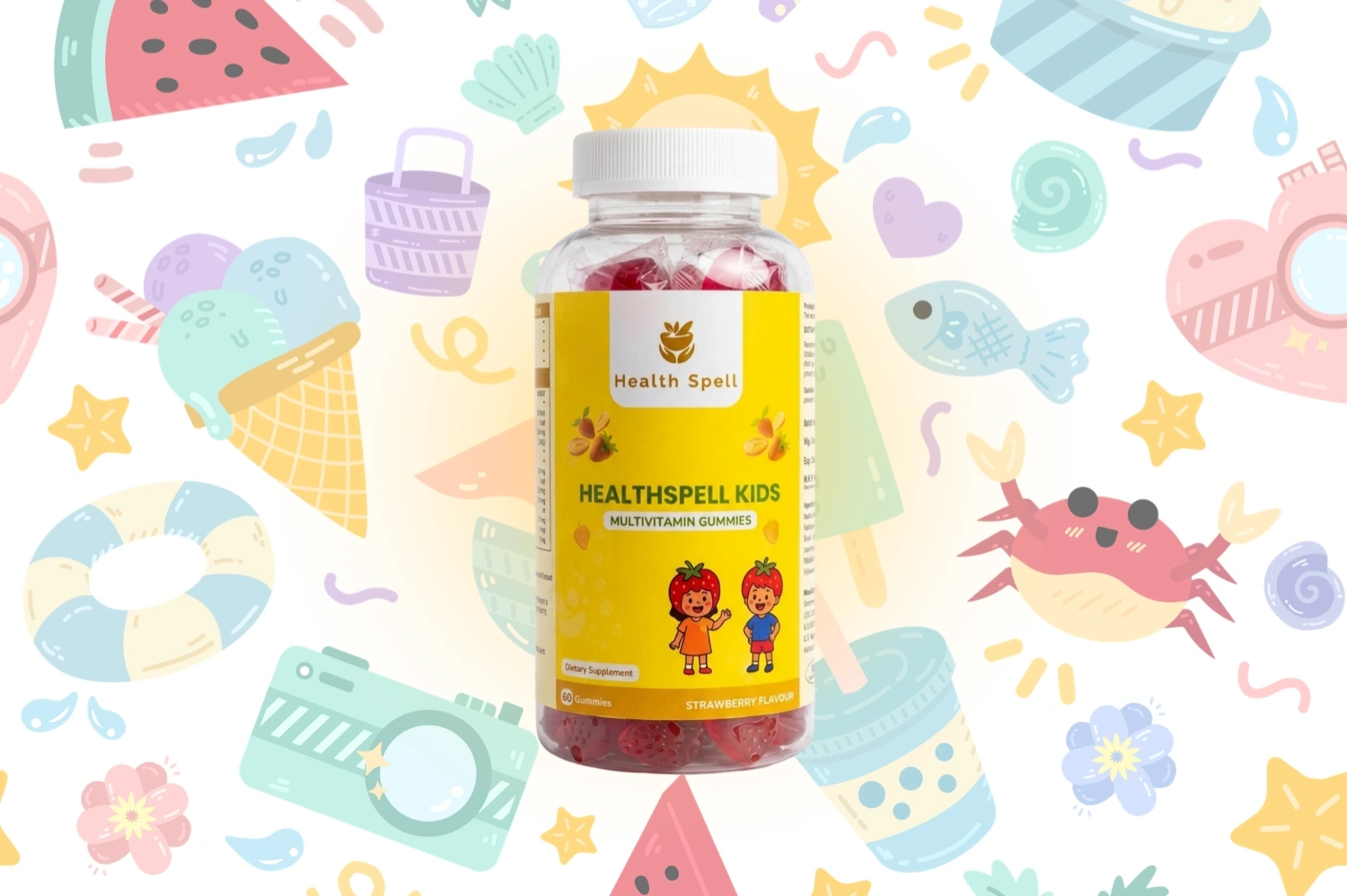
Health Spell Nepal's Kids Multivitamin Gummies were designed with exactly this in mind a complete, child-friendly multivitamin that children love to take and that parents can feel confident giving.
Here's what makes them different from the average gummy vitamin on the market.
No Added Sugar. No Glucose Syrup.
Most gummy vitamins are essentially candy with vitamins mixed in. Health Spell's gummies are sweetened with Fructooligosaccharides (FOS) a natural prebiotic fiber that gives a pleasant taste without sugar, glucose syrup, or artificial sweeteners.
FOS doesn't just sweeten safely. It also acts as a prebiotic, feeding the beneficial bacteria in your child's gut. Gut health is increasingly recognized as central to immunity, mood, energy, and nutrient absorption so this ingredient does double duty.
A Complete Vitamin Spectrum
Each gummy is packed with:
Nutrient | What It Does |
Vitamin A Palmitate | Supporting healthy vision, boosting the immune system, and promoting skin cell renewal and repair. |
Beta Carotene (10%) | Enhance immune function, support eye health, and provide natural antioxidant protection |
Folate | Make and repair DNA, support rapid cell division, and produce healthy red blood cells |
Vitamin B12 | Maintaining healthy nerve cells, facilitating red blood cell formation |
Vitamin C | Supporting immune function, stimulating collagen synthesis for skin and tissue repair |
Vitamin E | Neutralizing free radicals to protect cells from oxidative damage, supporting immune resilience |
Potassium Lodide | Protect the thyroid gland from radioactive iodine absorption during nuclear emergencies |
Inositol | Improving insulin sensitivity, balancing hormones for reproductive health, and regulating neurotransmitters |
Vitamin B1 | Convert carbohydrates into cellular energy, maintain a healthy nervous system, & support proper heart and muscle function |
Vitamin B2 | Break down proteins, fats, and carbohydrates into energy, maintain healthy skin and eyes |
Vitamin B6 | Regulating mood through neurotransmitter synthesis, supporting cognitive development |
Biotin | Converting macronutrients into cellular energy, supporting the production of keratin for hair and nail strength |
Boron | Strengthening bone density and enhancing brain function |
Niacinamide | Strengthening the skin barrier, reducing inflammation, and supporting cellular energy production |
Vitamin B5 | Synthesize coenzyme A (CoA) for energy metabolism, support hormones, and maintain healthy skin and hair |
Vitamin D3 | Enabling calcium absorption to build strong bones and teeth, and modulating immune responses to protect against infections and chronic inflammation |
This is not a partial vitamin formula. This is a full-spectrum daily supplement designed to cover every major micronutrient gap that growing children face.
Bio-Available Ingredients
Health Spell Nepal uses premium, bio-available forms of each nutrient meaning the body can actually absorb and use what's in each gummy. Cheap supplements often use inferior forms of vitamins that pass through the body without being properly absorbed. This is one of the most important quality markers that many parents never think to check.

Supports Five Key Areas of Child Health
Physical growth the vitamins needed for bone density, muscle development, and healthy weight
Brain and focus B vitamins and fat-soluble vitamins that support cognitive performance and concentration in school
Immune strength Vitamins C, D3, A, and E working together to build resilience against seasonal illnesses
Natural energy The full B-complex to help convert food into usable energy, reducing mid-day fatigue
Gut health FOS prebiotic to support healthy digestion and beneficial bacteria
Is It Safe? What Parents Should Know
Health Spell Nepal's Kids Multivitamin Gummies are formulated as a dietary supplement. They contain vitamins and minerals at levels appropriate for daily supplementation, not therapeutic doses used to treat medical conditions. They are non-addictive, free from artificial sweeteners, free from glucose syrup, and free from added sugar. As with any supplement, we recommend consulting a healthcare professional or nutritionist if your child has a specific medical condition, known allergies, or is already taking other supplements or medications. Individual results may vary. These gummies are not intended to replace a balanced diet, diagnose, treat, or cure any medical condition.
Frequently Asked Questions
A Simple Summary for Busy Parents
If you read nothing else in this article, read this:
Children's bodies need vitamins and minerals to grow, learn, stay healthy, and have energy.
Most children, even those eating decent home-cooked meals, have nutritional gaps because of picky eating, cooking methods, and modern food habits.
These gaps are usually silent, showing up as fatigue, frequent illness, or difficulty focusing rather than dramatic symptoms.
A daily multivitamin is a safe, simple, and effective way to fill those gaps.
Health Spell Nepal's Kids Multivitamin Gummies are sugar-free, prebiotic-enriched, full-spectrum, and made with bio-available ingredients designed specifically for the growing children of Nepal.
Your child deserves every advantage in their growth and development. A single gummy a day is one of the simplest things you can do to give them that support.
Ready to Give Your Child Complete Daily Nutrition?
Order Health Spell Kids Multivitamin Gummies
Price: NPR 2,050 | Ships across Nepal
For questions, reach Health Spell Nepal on WhatsApp: +977 9708097293
Follow Health Spell Nepal onFacebook |Instagram |YouTube